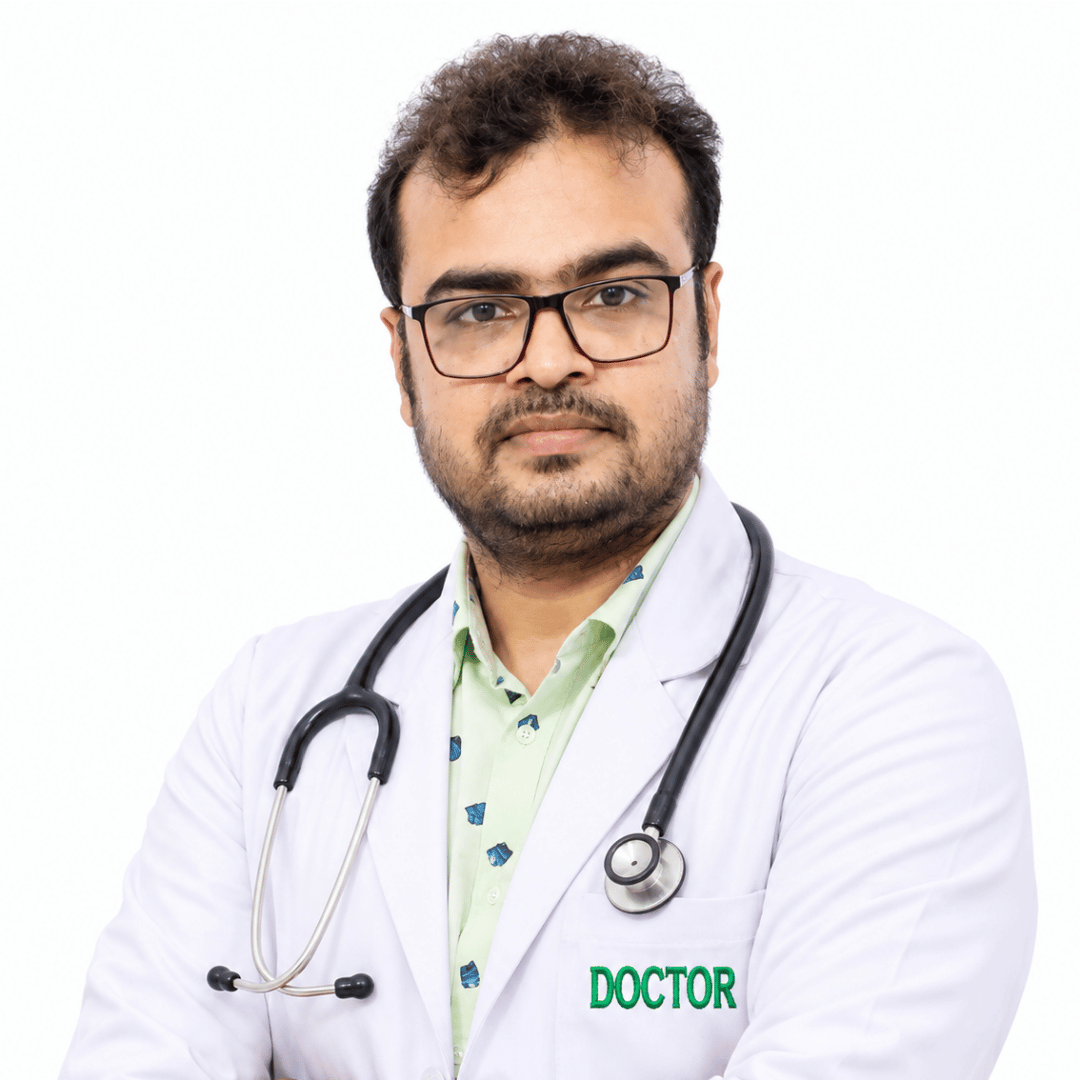
Dr. Anup Roy Chowdhury – Urologist & Kidney Surgeon, Khulna
Dr. Anup Roy Chowdhury is a Consultant Urologist at the National Institute of Kidney Diseases & Urology (NIKDU), Dhaka, with over 8 years of distinguished clinical, surgical, and academic experience. As an eminent Urologist and Reconstructive Surgeon, he provides expert care for extreme urological challenges, including xanthogranulomatous pyelonephritis, prune belly syndrome, megacystis microcolon, bladder exstrophy, and epispadias. Patients seeking expert urological evaluation for both adult and complex pediatric conditions receive evidence-based treatments tailored to ensure safe procedures and optimal urinary restoration. His medical practice combines high-precision surgical diagnostics with individualized, long-term patient care plans.
Professional Biography
Dr. Anup Roy Chowdhury completed his MBBS degree, establishing a robust clinical foundation in general medical sciences. He entered the prestigious BCS (Health) cadre and pursued rigorous postgraduate specializations, earning his Master of Surgery (MS) in Urology from the country's apex medical university, Bangabandhu Sheikh Mujib Medical University (BSMMU). This premier qualification equips him with the advanced technical skills required to manage the most difficult operative and non-operative disorders of the kidneys, ureters, bladder, and genitalia. Finding the best Urologist leads patients to rely on his specialized clinical expertise cultivated at the National Institute of Kidney Diseases & Urology (NIKDU).
His primary clinical focus includes complex nephrectomies for destructive infections like XGP, multi-staged reconstructive surgeries for bladder exstrophy and epispadias, abdominal and urinary tailoring for prune belly syndrome, and advanced diagnostic evaluation for rare conditions like megacystis microcolon. His diagnostic framework incorporates advanced pediatric and adult CT Urograms, voiding cystourethrograms (VCUG), diagnostic cystoscopy, and comprehensive risk stratification to formulate effective, long-term reconstructive strategies.
At-a-Glance Profile Card
| Profile Field | Details |
| Full Name | Dr. Anup Roy Chowdhury |
| Primary Specialty | Urology (Kidneys, Bladder, Ureters, Prostate) |
| Secondary Specialties | Pediatric Reconstructive Urology & Complex Renal Infections |
| Designation | Consultant (Urology) |
| Workplace | National Institute of Kidney Diseases & Urology (NIKDU), Dhaka |
| Total Experience | 8+ Years |
| Location | Dhaka / Khulna Region, Bangladesh |
Qualifications & Education
MBBS – Bachelor of Medicine and Bachelor of Surgery
BCS (Health) – Bangladesh Civil Service (Health Cadre)
MS (Urology, BSMMU) – Master of Surgery in Urology, Bangabandhu Sheikh Mujib Medical University
Designation & Workplace
Designation: Consultant (Urology)
Workplace: Department of Urology, National Institute of Kidney Diseases & Urology (NIKDU), Dhaka
Diseases Treated
Xanthogranulomatous pyelonephritis (XGP) requires complex surgical kidney removal.
Prune belly syndrome demands abdominal wall and urinary tract reconstruction.
Bladder exstrophy requires multi-staged pelvic and bladder reconstructive surgery.
Epispadias demands highly delicate genital and urethral repair.
Megacystis microcolon requires specialized multidisciplinary urinary and bowel management.
Benign prostatic hyperplasia (BPH) requires precision prostate resection (TURP).
Urolithiasis (kidney and ureter stones) demands advanced laser lithotripsy.
Urethral stricture demands specialized reconstructive urethroplasty.
Vesicoureteral reflux requires endoscopic or open anti-reflux surgery.
Hydronephrosis demands urgent kidney decompression and ureteral stenting.
Bladder tumors require cystoscopic resection (TURBT).
Male infertility needs advanced andrological evaluation.
Prostate cancer requires oncological evaluation and radical surgery.
Urinary tract infections (UTI) demand culture-specific antibiotics.
Undescended testicles (Cryptorchidism) require surgical repositioning (orchiopexy).
Clinical Specialties & Treatment Areas
Congenital & Pediatric Reconstructive Urology: Specialized, staged surgical correction of rare birth defects like bladder exstrophy, epispadias, and prune belly syndrome to restore normal anatomy and urinary continence.
Complex Renal Infections & Endourology: Surgical management of severely damaged, chronically infected kidneys (such as in XGP) and minimally invasive stone clearance.
General Urology & Andrology: Advanced interventions for prostate enlargement, urethral strictures, and functional urinary tract disorders across all age groups.
Advanced Procedure Breakdown
Complex Nephrectomy for XGP
Xanthogranulomatous pyelonephritis destroys kidney tissue and replaces it with inflammatory masses that heavily stick to surrounding organs. Surgically removing this kidney is incredibly challenging and requires a highly skilled urologist to meticulously dissect the kidney away from the bowel and major blood vessels without causing injury.
Multi-Staged Bladder Exstrophy Reconstruction
A complex series of surgeries for infants born with their bladder exposed on the outside of the abdomen. The procedure involves closing the pelvic bones, placing the bladder back inside the pelvis, reconstructing the abdominal wall, and eventually creating a functional urinary sphincter to achieve continence.
Epispadias Repair & Urethroplasty
A delicate reconstructive surgery to correct a congenital defect where the urethral opening is on the top aspect of the penis. The surgeon uses local tissue to rebuild a normal urine tube, correct any penile curvature, and ensure functional and cosmetically normal genitalia.
Condition-Specific Deep Dives
Xanthogranulomatous Pyelonephritis (XGP)
A rare, severe, and chronic inflammatory disorder of the kidney, almost always triggered by a long-standing obstructive kidney stone and recurrent infections. The kidney loses its function completely and resembles a tumor on CT scans. It requires absolute surgical removal to cure the severe sepsis and pain.
Prune Belly Syndrome
A rare congenital disorder predominantly affecting males, characterized by a triad of symptoms: missing or extremely weak abdominal muscles (causing a wrinkled "prune-like" belly), undescended testicles, and an abnormally expanded, poorly functioning urinary tract. It requires extensive reconstructive urology and lifelong monitoring.
Bladder Exstrophy
A severe birth defect where the skin over the lower abdominal wall does not form properly, leaving the bladder open and exposed on the outside of the body. It requires immediate, highly specialized pediatric urological care and multiple reconstructive surgeries to protect the kidneys and restore urinary control.
The Doctor’s Clinical Approach
Dr. Anup Roy Chowdhury combines meticulous clinical evaluation with advanced uro-radiological interpretation. His philosophy emphasizes unparalleled patience and precision required for complex congenital reconstructions, educating parents deeply about the multi-staged surgical journeys of their children, and prioritizing the preservation of kidney function in severe chronic infections.
Specialized Risk Factors
Emergency Callout: Immediate emergency medical evaluation is required if a patient with a known kidney stone develops overwhelming sepsis with severe flank pain and a palpable abdominal mass (signs of XGP complications), or if a newborn presents with an exposed, bleeding bladder mucosa or a complete inability to pass urine.
Certifications & Professional Memberships
Member, Bangladesh Medical and Dental Council (BMDC)
Member, Bangladesh Association of Urological Surgeons (BAUS)
Patient Visit Preparation Checklist
Bring all prior diagnostic imaging films (especially CT Urograms, MCU/VCUG for children, and USG KUB).
Maintain a complete list of current prescription medications, particularly long-term antibiotics used for chronic kidney infections.
Keep a detailed symptom diary, especially noting urinary incontinence patterns or recurrent fever episodes.
Ensure both parents accompany pediatric patients to fully understand the long-term, multi-staged reconstructive surgical plans.
Last Modified: October 22, 2026